As part of an ongoing photo project, I recently paid a second visit of 2019 to Catalonia. This time I was travelling north up the coast from Barcelona to the small seaside-town of Malgrat de Mar.
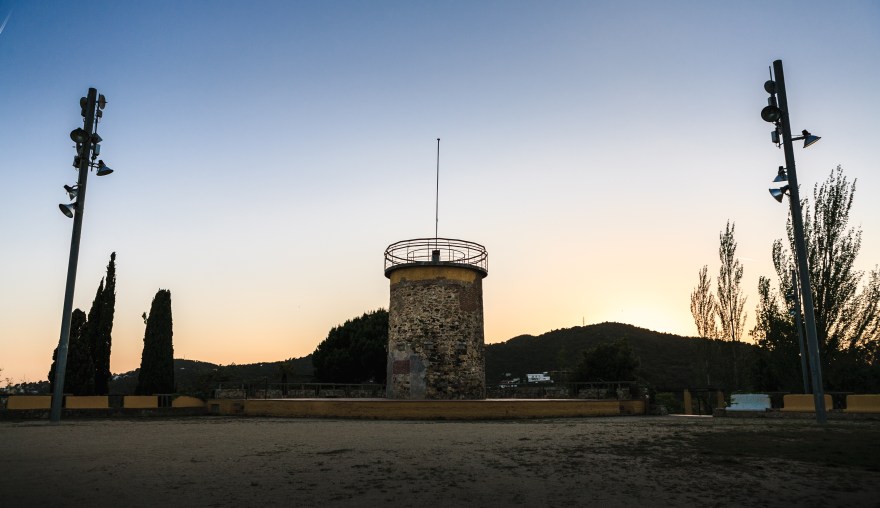
The purpose of the trip was to meet up with British-born artist Rob McDonald, who is based in Catalonia and is the creator of the community memorial campaign, Solidarity Park. The project commemorates an incident involving volunteers of the International Brigade, which took place at the height of the Spanish Civil War almost exactly 82 years to the day of our meeting.
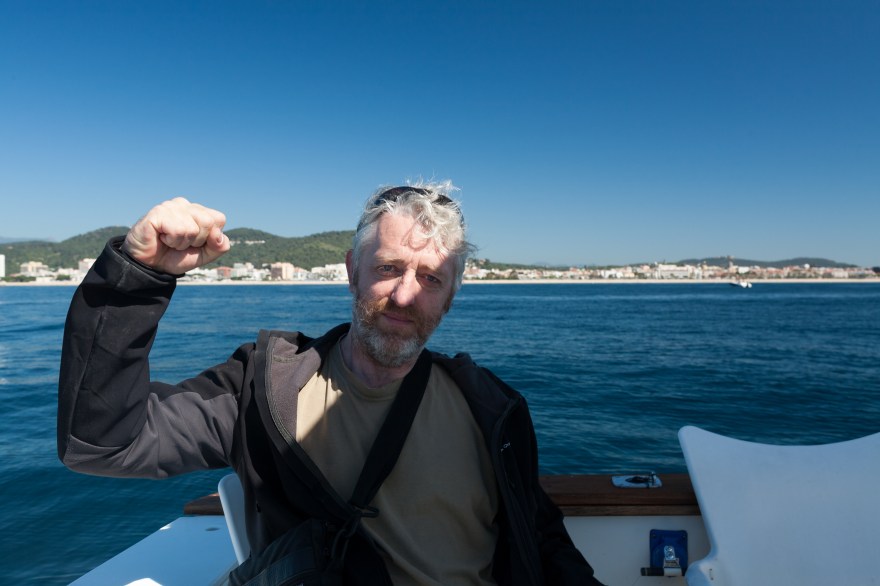
I was greeted warmly by Rob at his studio and exhibition space in Malgrat de Mar where I was also introduced to Chris, another British expat who has lived for many years in Catalonia and is active in relevant circles. We were then joined by Paco, a local politician and a supporter of the Solidarity Park project.

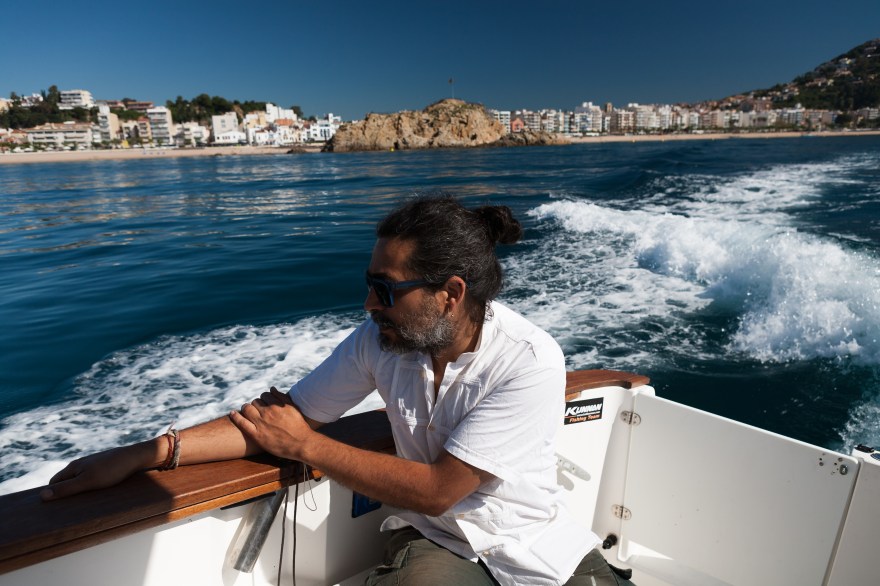
Together we were heading a further 15 minutes up the coast to the town of Blanes where a boat had been arranged to take us to a site approximately 2 kilometers off the coast of Malgrat de Mar.
The significance of this site was that it is the location of the wreckage of the Spanish liner, the MV Ciudad de Barcelona, which was sunk on May 30th, 1937. The ship had been travelling from Marseille to Spain carrying several hundred International Brigaders as well as military cargo for the Republican war effort when it was torpedoed by an Italian submarine belonging to General Franco’s nationalist forces.
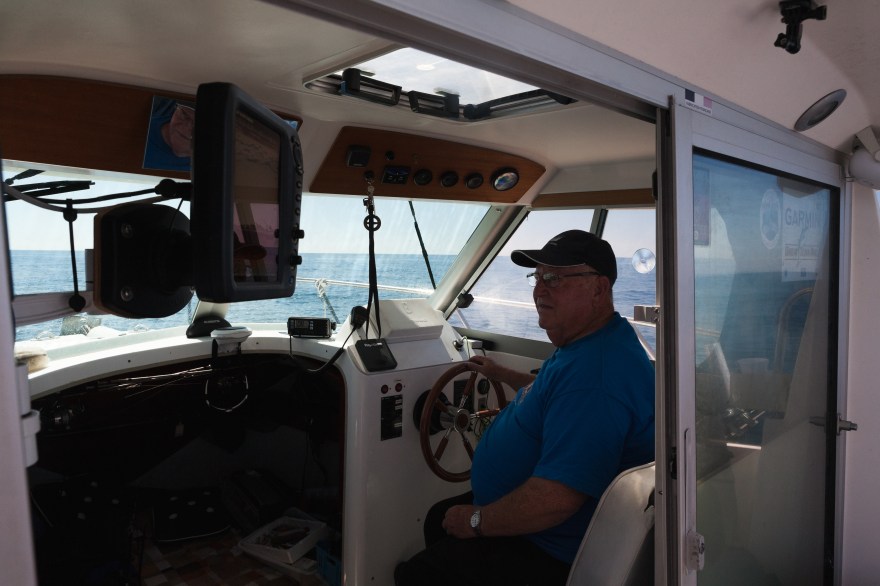
We arrived at the town’s harbour where we met with Noria, a local secondary school English teacher who had been responsible for arranging the boat trip with her father (also named Paco) who was to be ship’s Captain during our short voyage.
As we left the harbour in our modest fishing boat, Paco pointed to me the area further along the coast where the ship had initially been fired upon by the Italian submarine. The ship had received several warnings of enemy submarine activity in the area and was tightly hugging the coastline in case of attack. This first torpedo turned out to be a dud, missing its target and ending up ashore on the next coastal town over.
The pleasant weather of late spring had brought many of those on board up on deck despite orders to stay below. The Non-Intervention Agreement had made the process of volunteers entering into Spain a clandestine operation. Those on board represented a truly Internationalist force of volunteers from across the globe, including many Americans and Canadians, as well as some Australians and New Zealanders mixed with innumerable European nationals; all hoping to reach Spain to play their part in halting the rising threat that fascism posed to the world. Tragically, however, many of those volunteers would never manage to set foot on Spanish soil.
Just before 3 p.m. the Italian submarine fired a second torpedo, which plunged into the ship’s aft close to the engine room where it exploded; killing many instantly and trapping many more inside.
Chaotic scenes ensued. Volunteers darted around looking for life jackets as many jumped overboard without. The stern of the rapidly sinking ship was disappearing beneath the waves. Two of the lifeboats at the stern of the ship were underneath the water before they could be freed, another two were successfully launched while one overturned – throwing its occupants into the water and then crashing down on top of them. The hundreds of people now in the water clambered onto any piece of debris they could find or quickly swam away to escape the force of the sinking ship dragging them below with it.
The ship was completely submerged in a matter of minutes. Around the area of the sunken vessel, the crystal blue of the Balearic Sea was tinted crimson as bodies and flotsam bobbled on its oily surface. Many witness accounts of the incident tell how as the ship sank voices of volunteers still trapped within the boat could be heard singing ‘The Internationale’ – the anthem of the International Brigades.
According to prominent researcher Alan Warren, four of the 60 crew and 187 of the 312 passengers died. An exact number of volunteers is difficult to give due to them being smuggled on board. At least 23 of the survivors of the sinking of the Ciudad de Barcelona would later be killed fighting in the civil war.
My interest in this tragic incident was triggered by an account from Welshman, Alun Menai Williams of Gilfach Goch, who was one of a handful of Welshmen aboard the ship that day. They were; Harold Dobson of Blaenclydach, Alwyn Skinner of Neath, Emlyn Lloyd of Llanelli and Ron Brown of Aberaman, all of who survived. According to Williams, there was also an unknown man from Swansea aboard the ship who drowned.
For me, as compelling as Williams’ account of the sinking was, what I found just as compelling was his story leading to getting aboard the Ciudad de Barcelona. Having reached the Pyrenees, he had been arrested before reaching the border with a party of other volunteers aiming to cross into Spain. Williams had been in charge of the group’s money supplied by the French Communist Party in Paris. Having money meant he was able to avoid vagrancy charges and a prison sentence. Despite not being charged, Williams was ordered to return to the UK and was escorted by French authorities all the way back to Paris. Deciding against returning to the UK, Williams then attempted to reach Spain by travelling to Marseilles in hope of making contact with people who could aid him in doing so. Failing to make any contacts, and without any money, he was forced to finally return to Britain.
Upon arriving in the UK, Williams deliberated for a short period of time then headed back to the Communist Party headquarters in London before making his second trip into France. He eventually made his way south; this time to Bordeaux, where he spent a month waiting to be shipped to the Basque country. However, this became impossible as Franco’s army took over control of the Basque region. At this point, himself, as well as a large group of other volunteers who were also attempting to reach Spain via the Basque area, were sent to Marseille where the 200-250 or so volunteers were smuggled onto the Ciudad de Barcelona.
Williams had been one of those who opted to jump overboard. He describes his fear during the two hours he was in the water, a feeling described by many other witness accounts. Their ordeal continued as a Republican plane dropped depth charges close to the survivors in an attempt to hit the submarine; the force of the underwater explosions thrashing them around in the water. The confusion at this time was so much so that some believed it to be an enemy plane and huddled in terror thinking it was about to strafe their boat as it flew low over the water attempting to attack the submarine.
Survivors were eventually picked up by locals from Malgrat de Mar in fishing boats then taken ashore. Many describe the kindness shown to them by the locals who took care of them and their surprise to find out they were in fact, anarchists.
At this time, relations between the communists and the anarchists were fractious following the conflict between the two groups during the ‘May Days’ fighting earlier that same May. Volunteers had been told that should they be discovered by anarchists they would be shot for being aligned with the communists. The reality of how they were treated by the anarchist fishermen and locals of Malgrat de Mar compared to their perceptions demonstrates the turmoil of the political climate within the Republican side of the Spanish Civil War at that time.
After spending a night in Malgrat de Mar and being paid a visit by the Catalonian president, Lluis Companys, who wanted to apologise personally to the volunteers for the manner of their entrance into the war and welcome them. They were then transported to Barcelona under the cover of darkness to avoid being attacked by anarchists in Barcelona.
The volunteers were taken to the Karl Marx barracks where they were organised as a unit. Volunteers were then given the option to go home if they wished. Only one volunteer took the opportunity to do so. From then they were moved to the International Brigade headquarters in Albacete and entered into the fight for Spain.
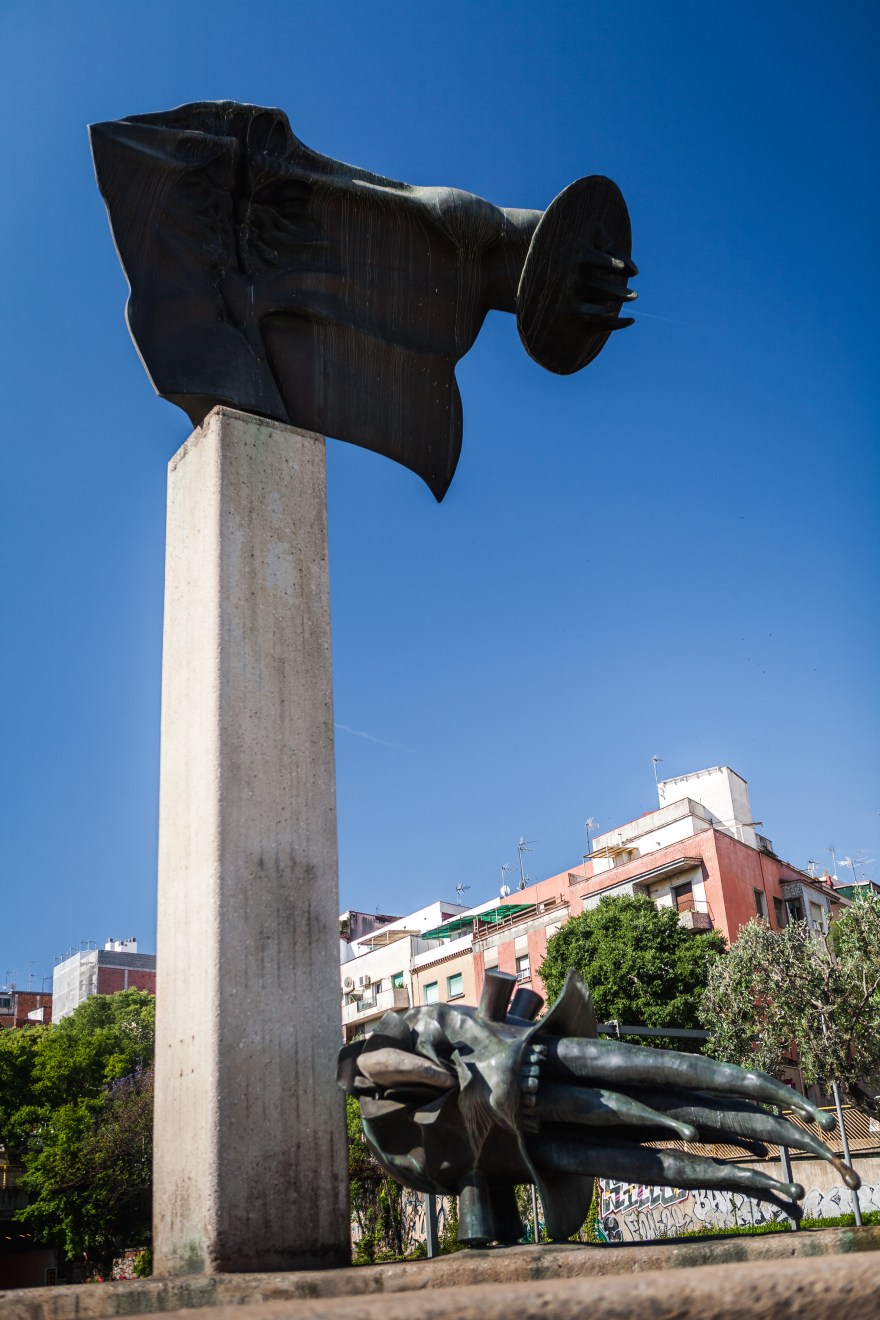
Keep up to date with the Solidarity Park project through their Facebook page.
– Glyn
 Glyn Owen