Day 36. Jarama Valley
Day 37. Villanueva de la Cañada
Day 38. Madrid
Day 39. Burgos

Day 40. Burgos
Day 41. Albany Rd

Day 42. Cardiff
Day 36. Jarama Valley
Day 37. Villanueva de la Cañada
Day 38. Madrid
Day 39. Burgos
Day 40. Burgos
Day 41. Albany Rd
Day 42. Cardiff
The revolution that took place across Spain during the opening stages of the Spanish Civil War has fascinated me for some time. Chomsky’s chapter in his well-known treatise ‘On Anarchism’ served a tantalising first glimpse.
The perception of the war today is generally painted as a war between the fascist rebels led by General Franco against the democratically elected Republican government. However, international interests coupled with the fragmentation of the Spanish political structure made for a highly complicated and nuanced conflict.
The scars of war can still be seen while walking the ornate streets of Barcelona in the present day. Contemplating sites where possibly the most significant and enigmatic moments in the history of revolutionary struggle unfolded, was both exhilarating and haunting.
The neighbourhood of El Raval was home for the week — among the skaters and alternative types that inhabit the tall, narrow maze of streets anchored by one of the most well-known skate spots in the world, Barcelona Museum of Contemporary Art (Museu d’Art Contemporani de Barcelona), known as MACBA.


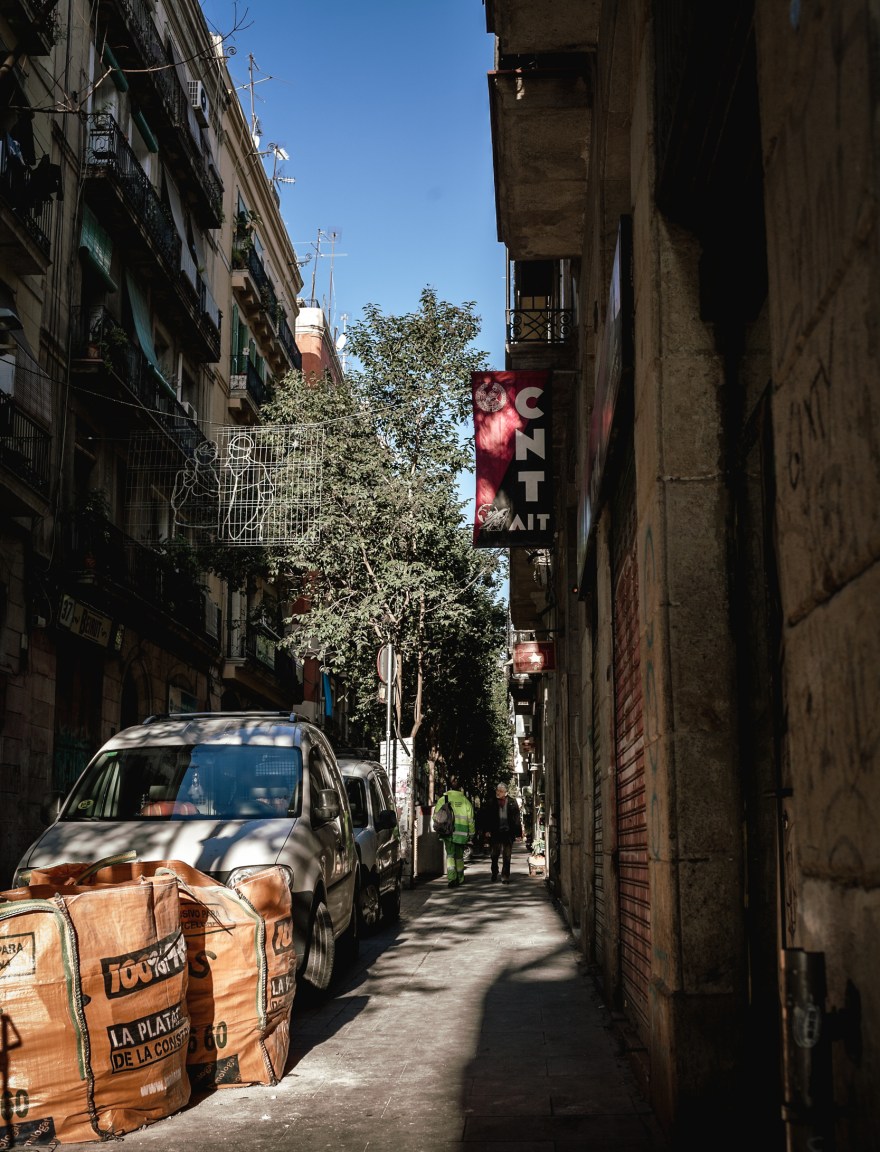
Despite its cool bars, vintage clothes shops, designer outlets, and other signs of gentrification, El Raval still clings to its traditional roots as the heartland of social radicalism in Barcelona. A stone’s throw away from MACBA, large red and black banners can be seen hanging from the Catalonian headquarters of the anarcho-syndicalist trade union, the CNT (Confederación Nacional del Trabajo or National Confederation of Labour), which played a primary role during the revolution of 1936-37.
Not far from El Raval lies Plaça de Catalunya, at the head of the iconic boulevard, La Rambla. On 19 July 1936, Plaça de Catalunya became the staging ground for the first major battle of the civil war. At the southeastern perimeter of the square, stands the building that would arguably come to symbolise the beginning and the tragic end of the worker’s revolution in Spain.
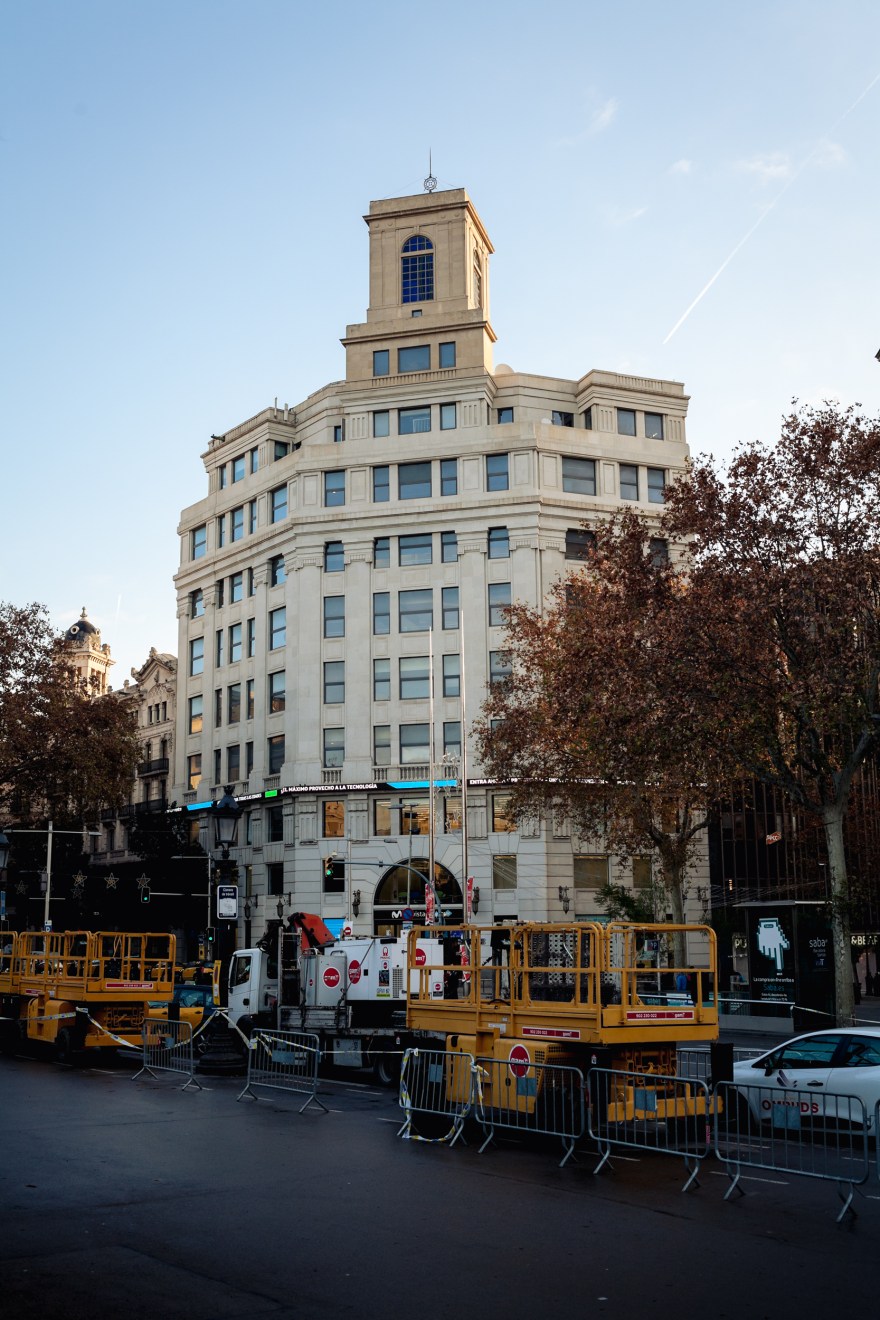
Facing inward onto the square is the Telefónica building. It controlled all communication within Spain, as well as with the rest of the world. The building was initially controlled by rebel soldiers taking part in the coup against the left-wing Republican government. They had been sent into the city with the objective of securing Barcelona’s crucial infrastructural buildings. However, over the course of the day, apart from certain pockets of the city, the rebels were gradually defeated by a somewhat unlikely alliance of armed police and organised workers — largely made up of anarchists and socialists from the worker’s unions. Following the fierce and bloody fighting in Plaça de Catalunya, the CNT took over control and collectivised the Telefónica building, along with the majority of the city’s other industries, as the power of the worker’s unions grew.
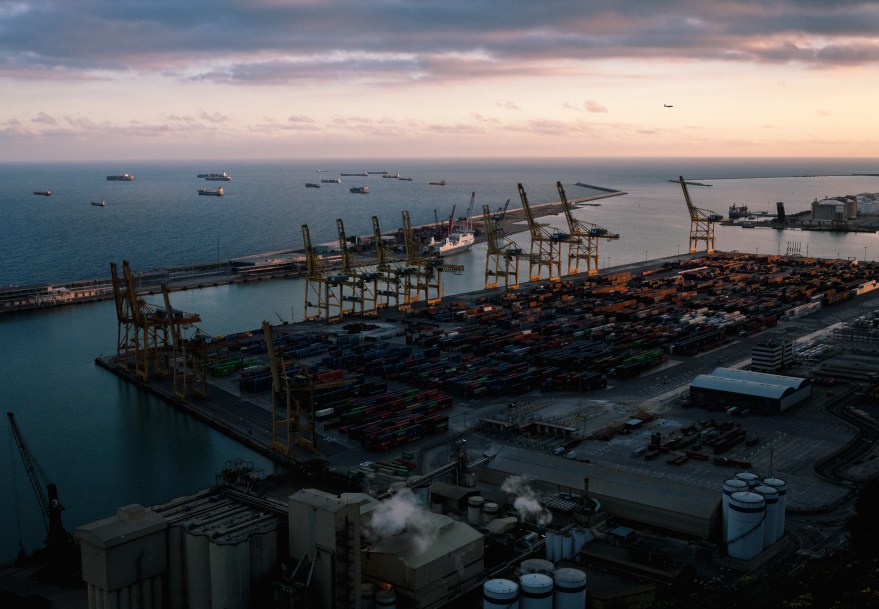
However, worker control was only to last for a matter of months; the Telefónica building taking centre stage in the events that would trigger the end of the revolution in Spain.
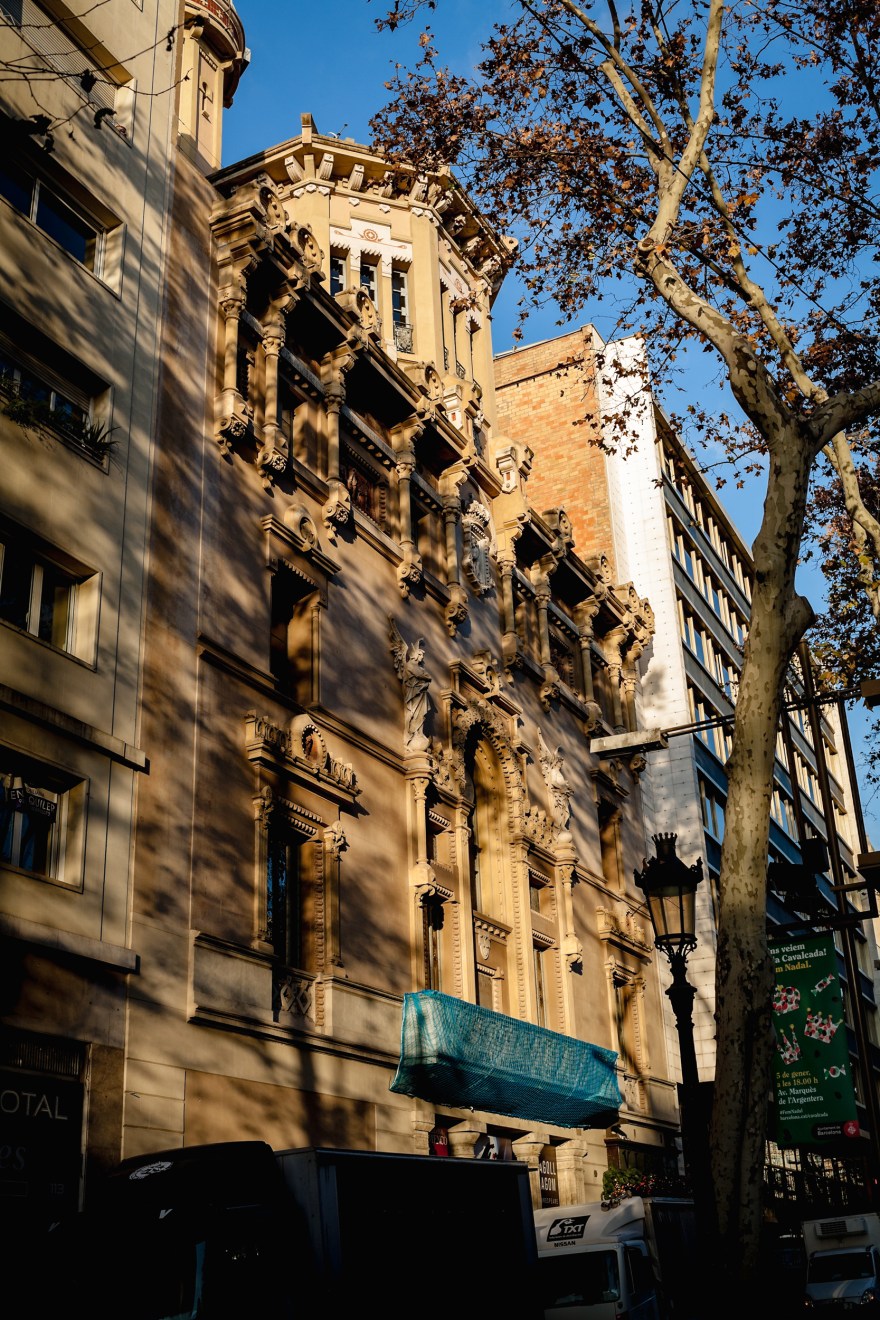
A short walk down La Rambla is Paliorama Theatre, where the author who wrote probably the most famous account of the war, George Orwell, was positioned on the roof as a sniper protecting the POUM headquarters on the opposite side of La Rambla during the infamous infighting between left-wing factions in May 1937. Orwell had joined and fought with the POUM fighting force; a Marxist anti-Stalinist political party that, along with the CNT, advocated for the civil war to be a revolutionary war, which was opposed to by the heavily Soviet-influenced Republican government.
On 3 May 1937, an attempt was made by Republican soldiers, led by a communist minister, to seize back state control over the Telefónica building from the CNT workers. The following day Barcelona’s streets erupted into violent skirmishes across the city in response to the viewed repression of workers by the Republic government. The fighting and various complex political maneuverings that took place over the course of the following week would come to be known as the May Days. These events effectively spelled the end of the revolution, with the anarchist worker’s unions the CNT and FAI eventually ceding power to the state. Once fighting had died down, the POUM was forcefully repressed by the government and Stalinist organisations, leading to Orwell having to flee from the city in fear for his life. The events during the May Days, to this day, remain a source of friction amongst socialists. A complete and total understanding of the exact events amidst the chaos of war is still a matter that is strongly debated.
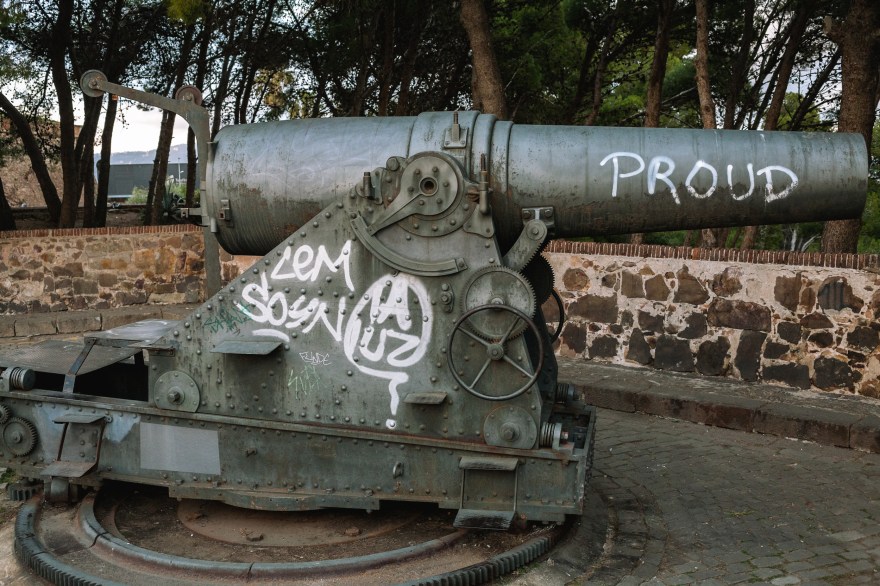
To the south of the city, rising up before the sea, is the large hill Montjuïc. Sitting on top of Montjuïc is an old fortress that saw a great deal of use by all sides during the civil war. The fortress was first taken by soldiers who supported the Republic from a garrison of rebel soldiers stationed there. Anti-aircraft guns were soon installed in an attempt to protect the city from aerial bombings.
Following the May Days fighting, many POUM members and anarchists were imprisoned in the fortress and only released moments before Barcelona was captured by General Franco’s rebel forces, at the closing stages of the civil war.
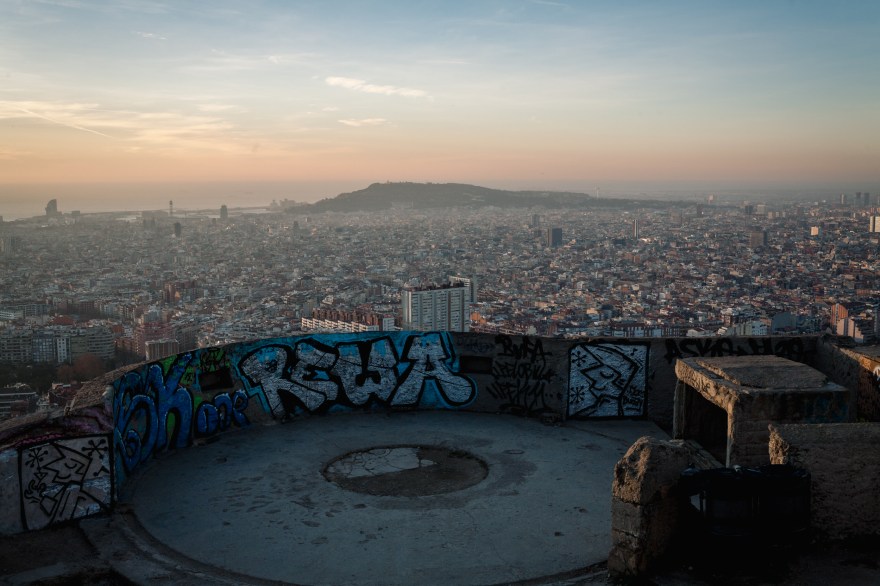
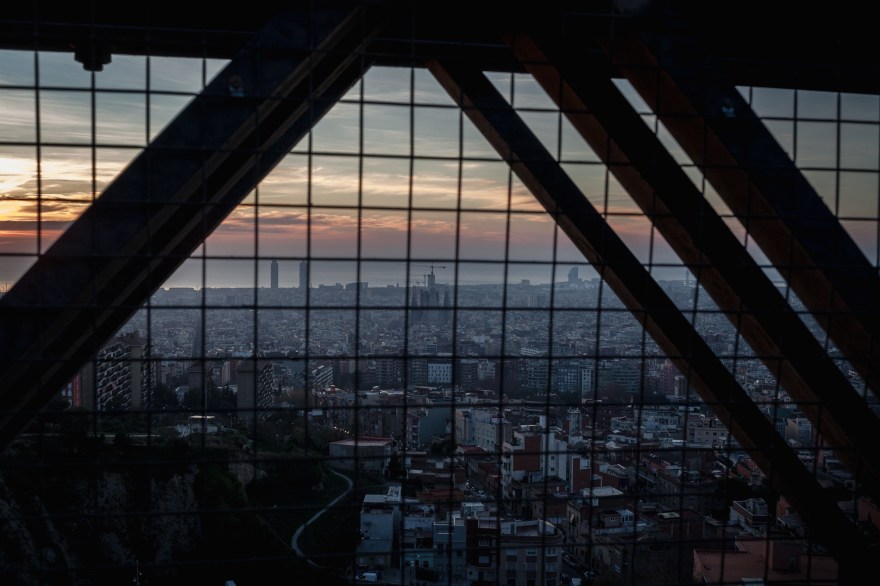
In the north of the city, in the district of Horta-Guinardó, is the steep hill of Turó de la Rovira. It is at this site that the Republic built its main defences against aerial attack from German and Italian bomber planes, supplied by Hitler and Mussolini.
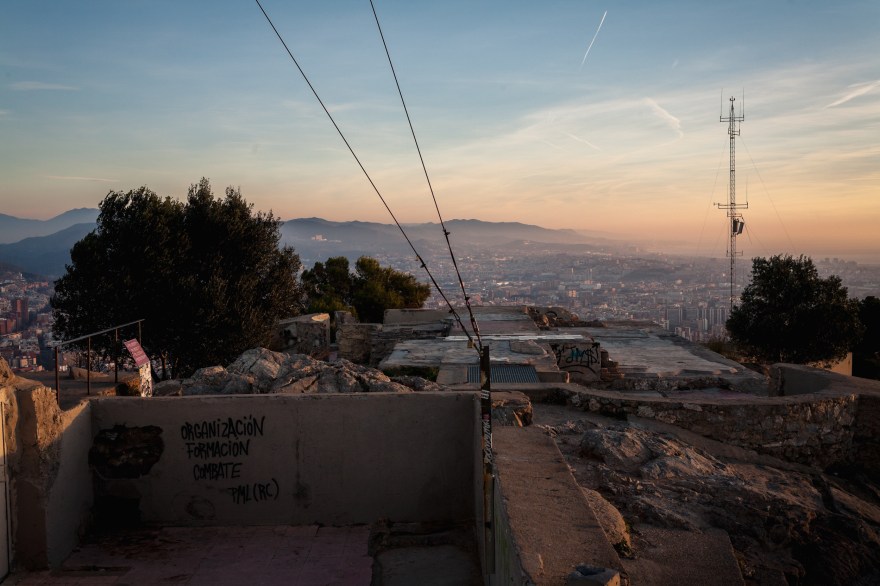
During the course of the war, Barcelona was systematically attacked by air, killing close to 3,000 people and injuring many more thousands in what was the first large-scale bombardments of a city in history, and a precursor to the atrocities committed against civilians during WW2.
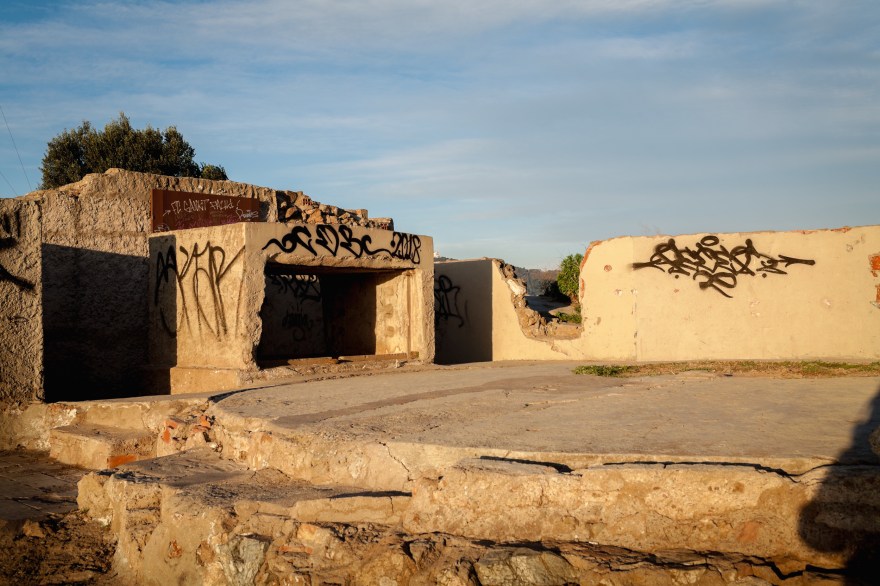
Today the bunkers serve as a museum and as a monument to the events of the war, as well as offering spectacular panoramic views over Barcelona towards the foothills of the Pyrenees.
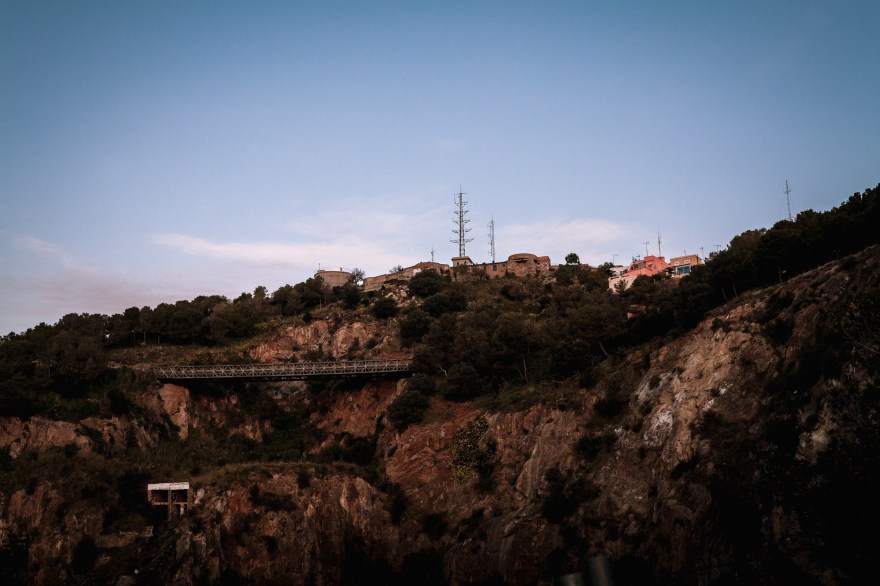
The anti-air defences were eventually destroyed in late January 1939 by the Republican troops as they retreated from General Franco’s army entering the city, in what was then an inevitable defeat for the Republic.
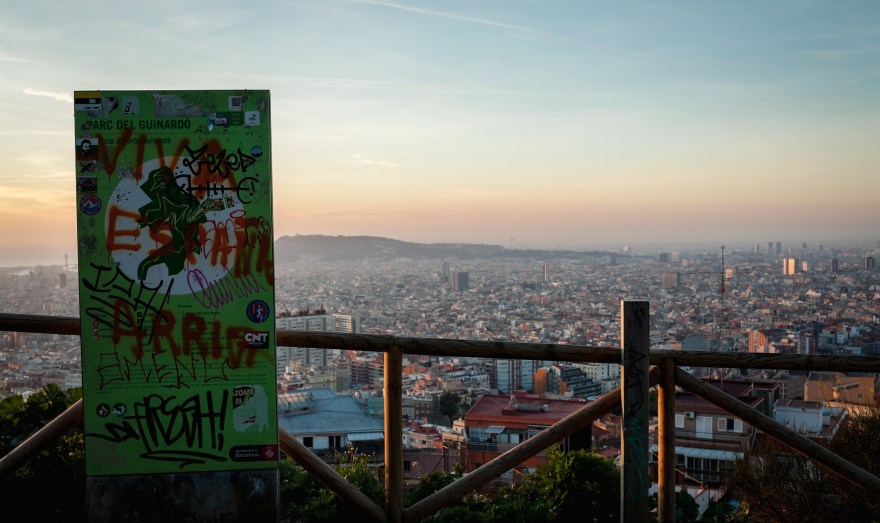
However, prior to the fall of Barcelona, the defences of Turó de la Rovira served a crucial role in protecting the skies over the city, when, at the end of October 1938, the Republic deployed the majority of its meager force of fighter aircraft during the farewell parade to the thousands of international volunteers who fought on the side of the Republic. The International Brigades had been pulled from the front at the end of September 1938 in order to be sent back to their respective countries in an effort by the Republic government to appease France and Britain, in what was a final desperate act to gain support to prevent the Republic’s imminent, and almost certain, defeat.
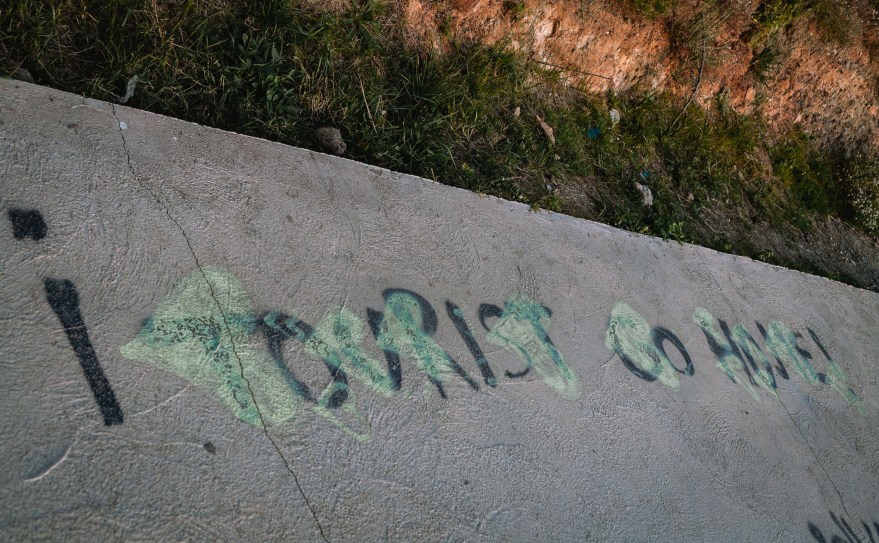
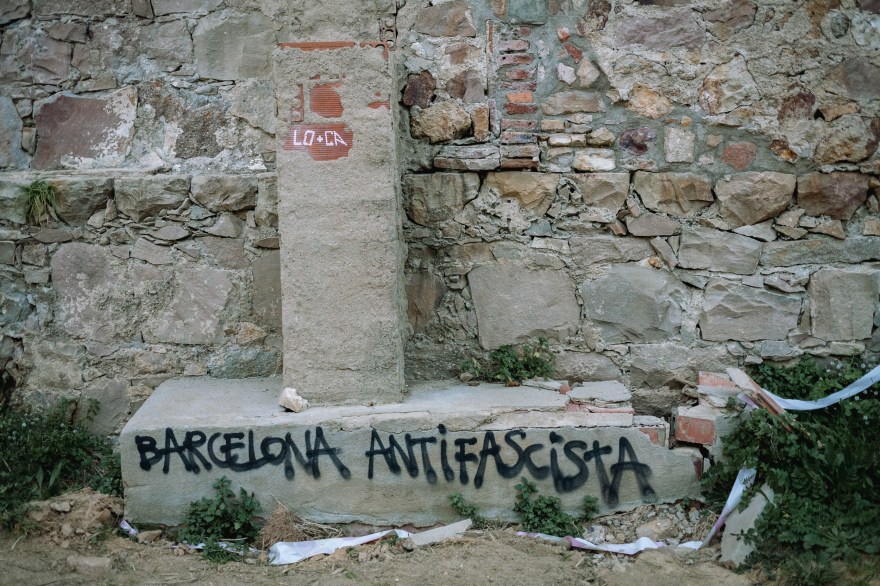
On the way to Bunkers del Carmel, I came across anti-tourist graffiti covering the path to the summit of the hill. Sadly, these former defences, which had once protected the International Brigades, while the whole of Barcelona turned out to praise the efforts of the anti-fascist internationalist, were now an opportunity to showcase locals’ anger towards tourists. Ironically, in the same area of the city, not too far from Turó de la Rovira, stands the monument to those foreign volunteers who were willing to give their lives to protect Spain, and humanity, from the looming threat of fascism.
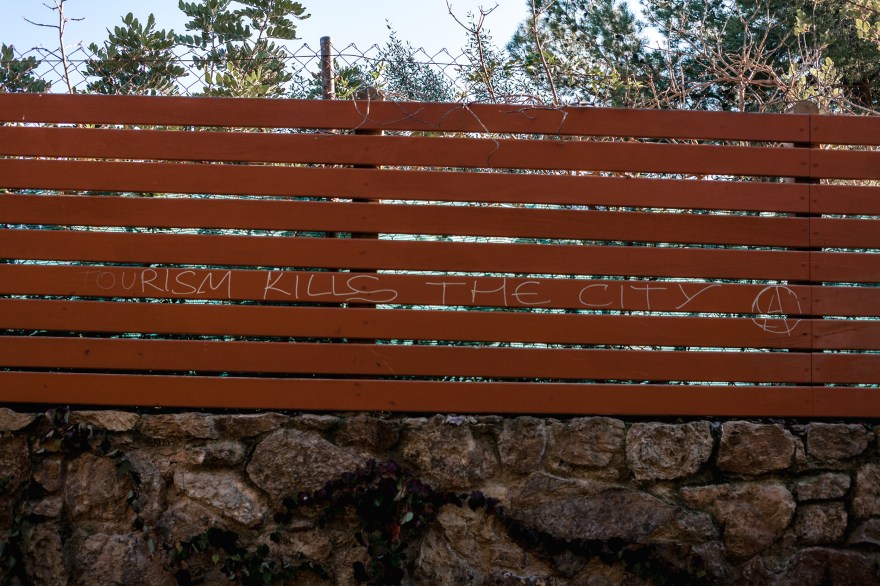
Similar messages expressing animosity towards tourism are prevalent all over the city, especially the sightseeing hotspots. Unfortunately, over the past several years, tourism in Barcelona has skyrocketed. So much so, that the burgeoning industry surrounding tourism is causing havoc for the lives of locals. I briefly witnessed Barcelona’s infamous overcrowding on New Year’s Eve, while swarms of people converged for the night’s celebrations. After a short bit of jostling through the densely packed hordes, I decided to celebrate elsewhere.
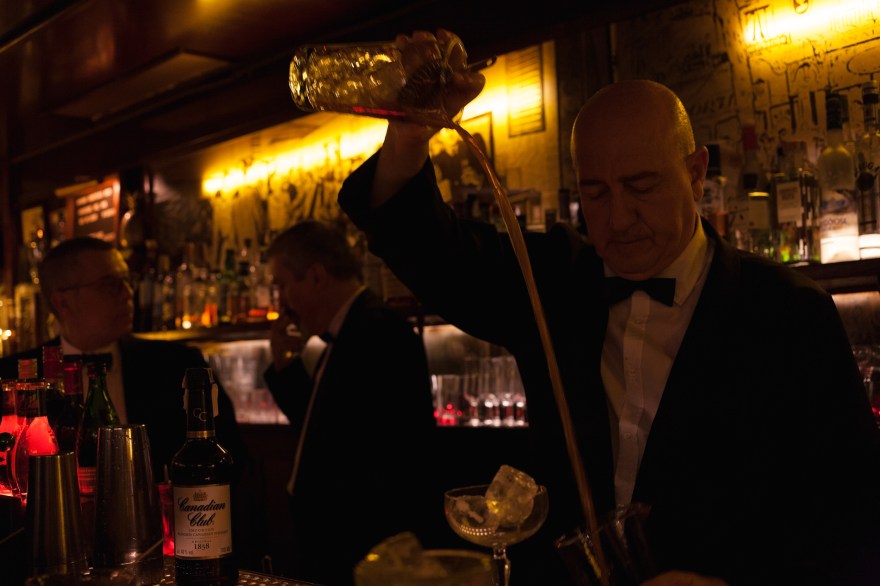
The favourite haunt to unwind at on the way home after a day of exploring was Barcelona’s first and oldest surviving cocktail bar, Boadas. It sits just off La Rambla on the fringes of El Raval, opening three years before the outset of the war in 1933. Beyond the bar’s low-key exterior the small, dimly-lit Art Deco room, where suited barmen stand ready to throw together a stiff cocktail amidst a background of dulcet jazz, creates a hazy, boozy atmosphere, transporting you back to Barcelona’s pre-war heyday. At that time, famous intellectuals and artists such as Miró and Picasso would frequent the bar. Though its most known patron — and likely its most indulgent — was another author who wrote on the Spanish Civil War: Ernest Hemingway.
While taking Hemingway’s advice and opting for the daiquiri, I dwelt on Barcelona’s problem of excessive tourism. This city, which had once so vehemently celebrated the international solidarity shown by the International Brigades, was now being plundered by a tourism industry that is quickly bringing it to its knees. Thoughts of Marxist theories on the contradictions of capitalism, and some vague notion of a correlation between the situation and the decline of left-wing politics in the face of rising right-wing nationalism steadily eroded with the second round of drinks, as the subtle haze took hold.
End.
Glyn Owen
I would like to thank Nick Lloyd whose insights hugely informed my research into Barcelona during the Spanish Civil War. If you would like a more in-depth explanation of the topics and places discussed in this post then I would highly recommend his book: ‘Forgotten Places – Barcelona and the Spanish Civil War‘.
During a recent trip to Spain I paid a brief visit to a community living in the foothills of the Sierra Nevada mountain range in the Andalusian city of Granada. I travelled there with my girlfriend and arranged to meet up with an old school friend who had been travelling around Spain during the summer.
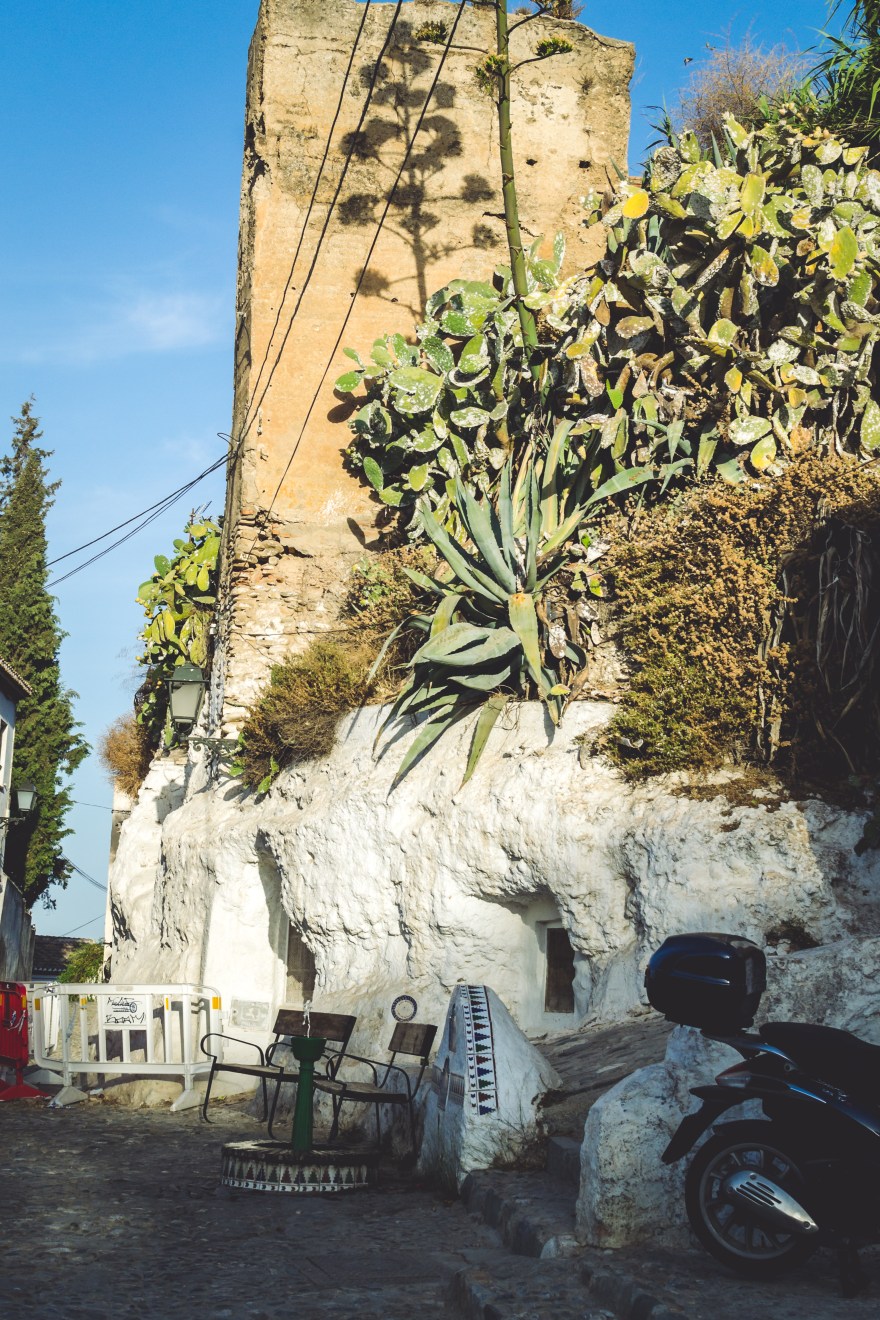
It’s a short bus ride from the city centre along steep, winding roads up to the district of Sacromonte on the city’s outskirts, where I had read about a community of people living in caves built into the hillside. The district itself is mainly a quaint suburban hamlet of small, white-washed dwellings that is renowned for its flamenco dances and association with Roma Gypsy culture due to the area becoming largely inhabited by communities of Roma Gypsies following the expulsion of the Moors from Spain in the 16th century. Roma Gypsies continued to live there even up until recent decades, but since then the majority of these caves have been transformed into modest houses filled with modern conveniences with everyday people living in them, and the perpetuation of any vibrant Roma Gypsy culture there is mostly just a show for tourists, at least from what I saw.
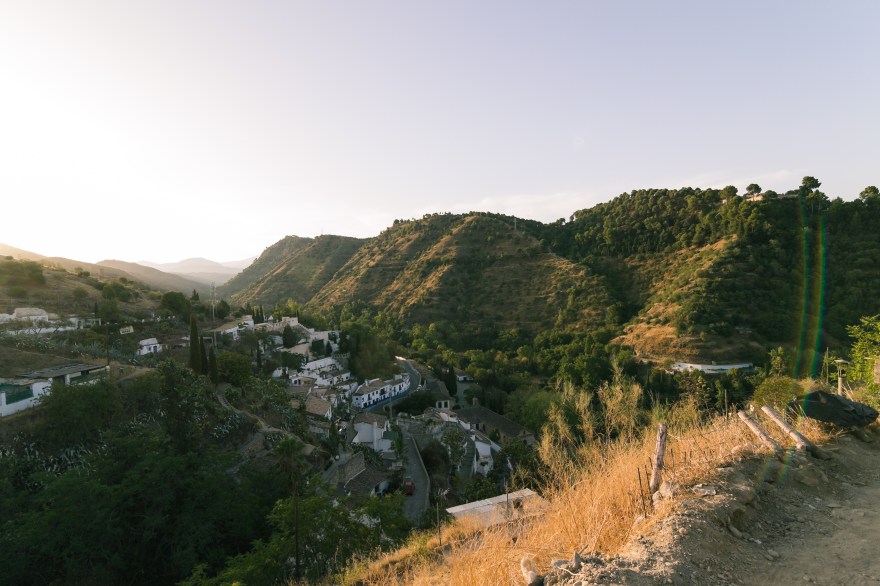
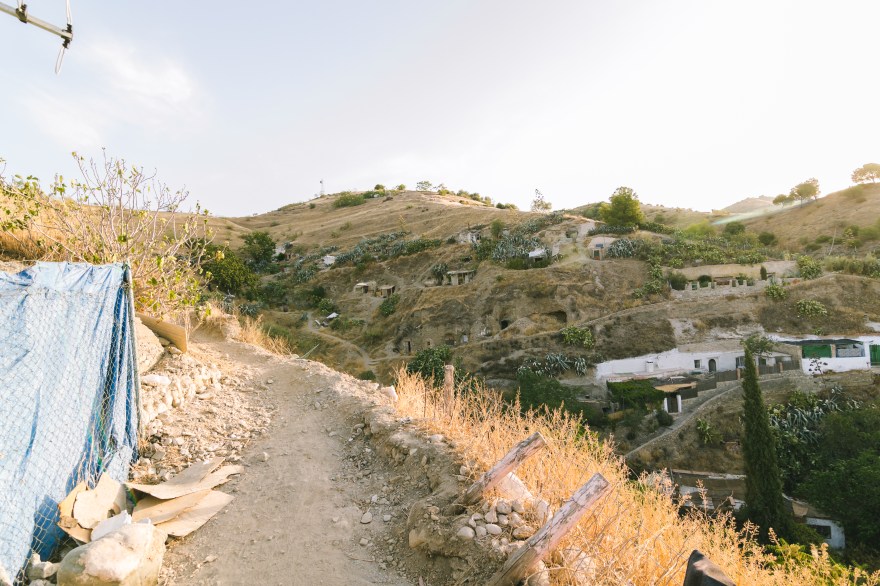
However, if you penetrate slightly deeper into the district and climb just a bit further up its slopes, you will wander into a more rustic landscape featuring cruder constructions with cave entrances spread all over the hillsides. These have become the homes of an ever-shifting mix of migrants, travellers and lifestylers who have adopted these caves forming a vibrant alternative community. After a little bit of exploring we found ourselves in an area of this community that they call ‘El Valle de las Naranjas’.
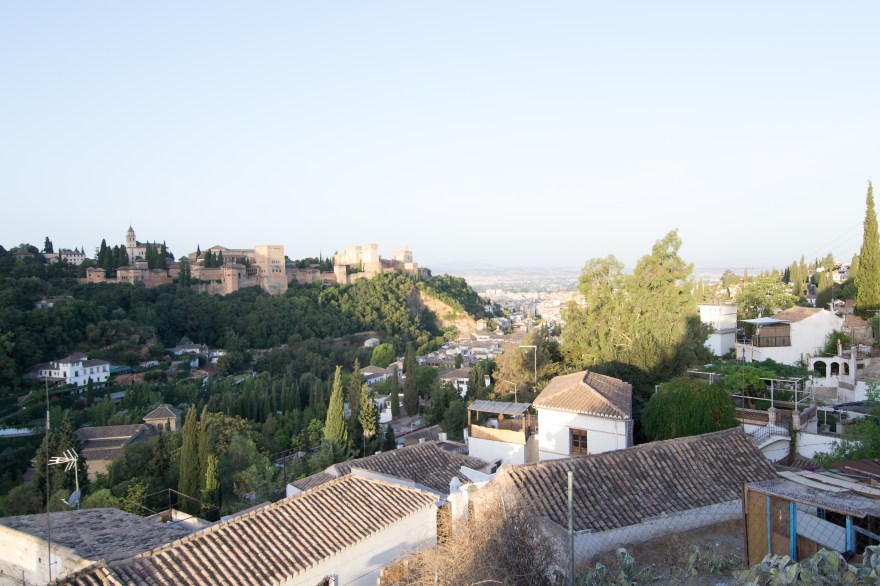
Here pebbled walkways and tiled roofs are left behind, replaced by dusty paths and canvas doors. The hillside that the caves are built into faces a stunning panoramic view stretching from the mountains down the valley over a sea of terracotta and further down into Granada. Looking out over the city, perched on the opposite side of the valley, is the enormous Moorish palace, the Alhambra dominating the landscape.
At the time of the visit it was August and while wandering the dirt trail we came across a group of adolescent cats taking shelter from the blazing afternoon heat in shade cast from a patch of parched tall grass and cacti. It must have been siesta time for most of the locals as there was hardly a person in sight, with only barking dogs and screeching cicadas disturbing the otherwise tranquil setting. Stopping to dote on the cats a woman, who I had said “hola” to in passing earlier on the path, approached us. She seemed keen to engage in conversation and ended up inviting us into her home.
Her name was Daniela; she had been living in the cave since December and had subsequently decided to purchase it from the previous owner.
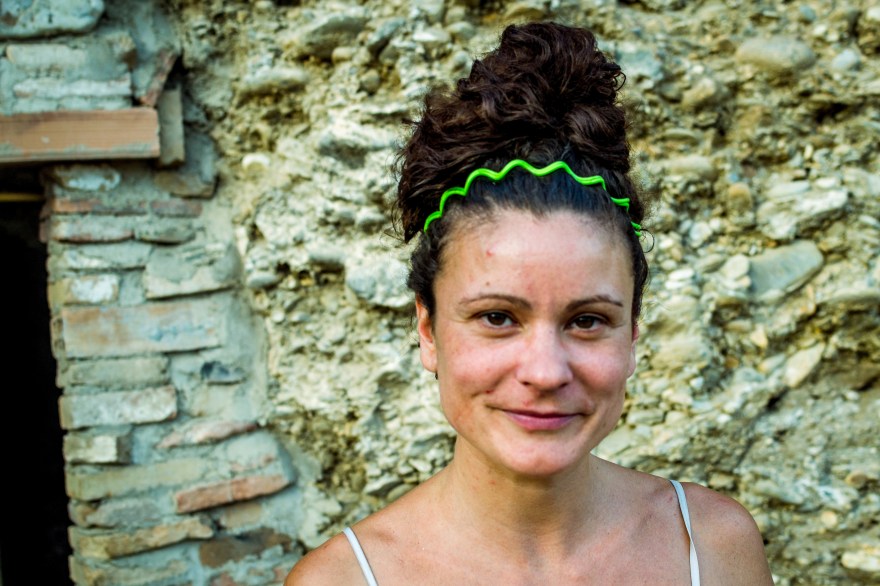
She was originally from the Wirral area of England and began travelling after deciding that studying for a degree in Law in Northwest England wasn’t the life for her, then going on to travel around the world living in several different countries, which distorted the typically distinctive Merseyside accent. Inside, her cave was an open, relatively large and comfortable area with covered floors and furniture that led into a couple of other rooms. The space emanated a definite sense of home and was certainly more than just a rudimentary shelter, but it was also in need of some repairs, especially to make it more habitable during the approaching colder months. Up until recently an Italian person had been staying with her and helping with some work, but at the moment there was no one to help her.
Previously Daniela had earned a living growing and selling plants. Her hope was to plant a garden in the earth just outside of her cave. She explained the difficulty in this as the area gets so little rain for much of the year and the only free access to water was from a small fountain that was a short trek away but would be difficult to carry back up the hills by herself in any amounts sufficient to maintain a decent-sized garden. Daniela offered to show us around a bit – taking us to one of her neighbours who lived in the cave just up the slope directly above hers. Her neighbour, and good friend, was, Marino, who after a bit of rousing emerged slightly dazed from his cave entrance, but greeted us warmly. We all sat down together outside his cave in the warm sun of the early evening. After a short rendition on his guitar (which had two strings missing) we sat around talking. Marino was a half Italian, half Spanish with Roma Gypsy heritage. He made his living from busking in the city. He was a jolly character speaking good English and with a great sense of humour. But there was also a sadness to him – being slightly vague about his past, which of course he had every right to be if he chose. He also didn’t want his picture to be taken, which he alluded to that it could cause trouble for his family if it was seen online, but also because he was taught that having your picture taken takes a person’s soul.
As we sat around speaking I got the opportunity to learn more about the community from Daniela. She explained that the only other source of water was from a home on the opposite hillside only a stone’s throw from hers, but that the person who lived there was not always willing to give access to the water for free. Money seemed to have a great hold over the community, leading to some opportunistic behaviour including instances of stealing. One of the ways some people made money was by selling drugs to tourists. The day before a tour guide in the city had approached us who worked for a tour company that took people up into the cave community. One of the ways he tried selling this too us by saying that the ‘hippies there give you free beer’. Both sides were clearly taking advantage of the community being a pull for tourists, but it was a reciprocal relationship and a means of survival for some, I suppose. Daniela seemed amused by what I had told her about the tour guide, and also seemed to take some offence. She said that she had no money at all and relied on food donations from a food bank in a local church to get by. At one point a group of tourists did even appear on top of the opposite hillside and seemed to stop to watch us sitting and talking, which did create a strange feeling of being a kind of human spectacle or sightseeing attraction.
It struck me that there didn’t seem to be a general, shared politics to the community giving it some kind of social cohesion, seeming quite fragmented and individualistic. Daniela felt that many people probably might identify themselves as punks or something similar but there was no hard ideology or general cooperation inherent in the community, except for the odd party where people drank to much and things tended to get out of hand, she told me almost wryly. This brought up some other problems with the community, such as alcoholism, which Daniela said was rampant in the community. This, mixed with the fact that there were very few women living there, resulted in the sad fact that she had had to defend herself from physical harassment from men on occasions; learning some important lessons early on about looking after herself in such situations, often meaning removing herself from them. Most of the people living here owned dogs, Daniela herself owning two, which now seemed an obvious practicality.
However, despite these issues, Daniela was generally very positive in her sentiment towards living here, particularly regarding the future of the community, saying that even in the months that she had been living here things were improving.
Eventually we were joined by another, a man named Placido. Placido was from Bulgaria; spoke very good Spanish but almost no English whatsoever, so conversation had to be translated both ways. He was extremely generous and had a constant smile. The more positive aspects of the community seemed to shine through Placido, straight away almost upon meeting him he wanted to share with us and to make friends. He brought with him his infant puppy that everyone wanted to play with. He also brought food and drinks, sharing them out to us. Daniela seemed very found of Placido, who came across as something close to a father figure. Placido also did not drink, saying that he did not like the way it affected his behaviour. After negotiating our way through a conversation between us all, Placido understood that I was interested in learning about the community and invited me into his home. His cave was a single room with white-washed walls, no larger than a typical sized bedroom, containing a good sized double bed, some furniture and a cooker. Daniela told me that he loved to cook and often cooked for her. Placido seemed to get a lot of joy from giving small gifts as tokens of friendship and something to remember him by. To my girlfriend he gave a dress, which he had been saving for his wife who still lived in Bulgaria and, from what I understood, was not keen on living in the cave community. To my friend he gave a piece of artwork that he had made and to me he gave a cast-iron teapot that he indicated was an antique.
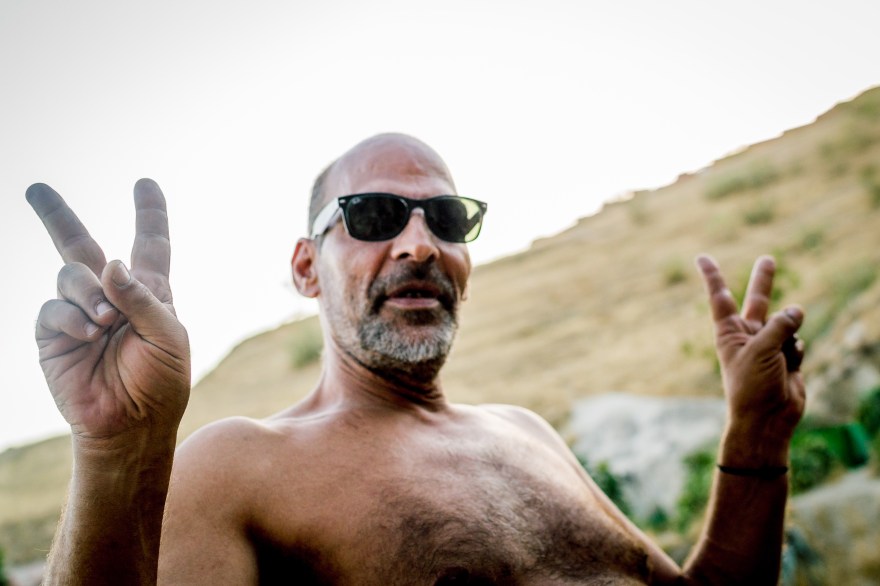
At some point during the conversations we were joined by a slightly unsavoury local inhabitant that both Marino and Placido seemed to find distasteful. The man seemed drunk and made some inappropriate remarks towards my girlfriend, exemplifying some of the points that Daniela had made. The relaxed and fun atmosphere became slightly tainted with the man’s presence, but it wasn’t too much trouble despite him being slightly antagonistic.
By this point it was also getting dark so I felt it was time to leave soon. Unfortunately our parting with Daniela was quite abrupt, as she had had word that someone she knew had been injured in an incident, which she assumed was alcohol related. The last we saw of her, she was running down the path that we had entered on towards the apparent location of her friend so to try to be of help. Before she dashed off we made our goodbyes and she invited us to visit again.
After saying our goodbyes to Marino, Placido kindly walked us back into Granada, where we realised there was no need to have gotten a bus at all. After our grateful goodbyes to him, he left us at the top of a steep road that led down into the busy town centre where we were immediately engulfed by the sound of a live jazz band playing flamenco to an audience sitting around dining tables outside next to the river running beneath the Alhambra.
We left El Valle de las Naranjas with mixed feelings but glad for the interesting experience. I was certain I had only scratched the surface of gaining a full understanding of the community and would certainly be interested in visiting there again for a longer time. What I did take away from the brief visit was a greater recognition for the importance of there being an emphasis on a shared system of ideals in independent communities in order for the community to be sustainable. Inappropriate social behaviour, unwillingness to share resources or stealing are not common occurrences in communities where I would say there are a greater sense of social cohesion or communal organisation.
The next morning we woke up early so I could get a photo of the sunrise over the Alhambra from a viewpoint that we had walked past on the way back with Placido. I decided to quickly scramble all the way back up the slope to get a shot down onto El Valle de las Naranjas. Seeing this view for the first time in the daylight I was struck by the realisation of the totality of the beauty of the setting, with the odd character of each shack-like construction protruding from the hillside and the grandeur of its idyllic surroundings. Looking back at this image now, the strange beauty of El Valle de las Naranjas feels like an allegory of the conflicting nature of the community, which holds so much potential yet feels like it still has a lot to over-come. Hopefully I’ll return next year and see if any progress has been made…
 Glyn Owen